Best Pyrography Sanders: 6 Precision Tools Ranked
By Jack Pettersson • 19th Feb
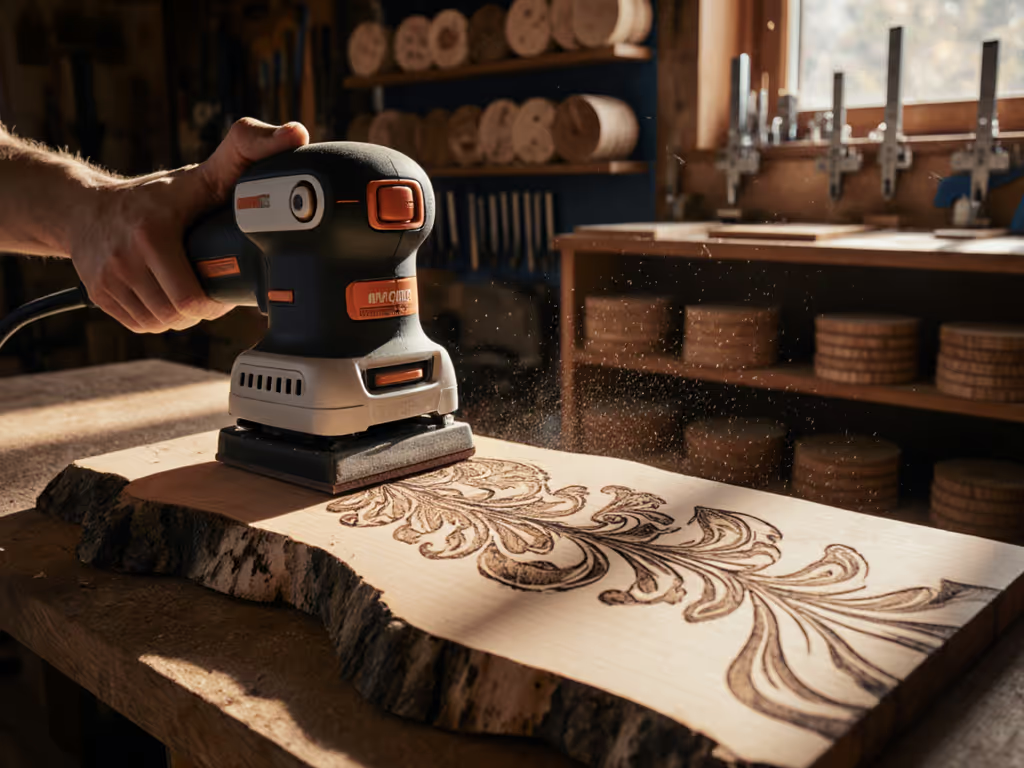
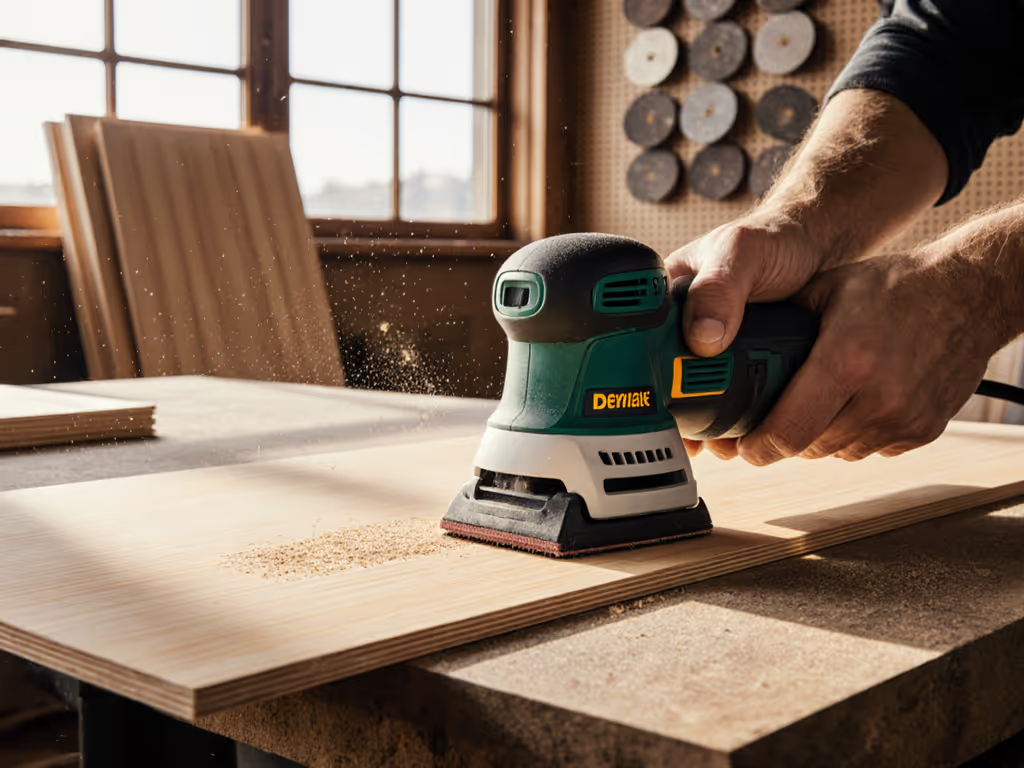
When you're preparing wood for pyrography or finishing pyrography projects, your sanding approach makes the difference between a canvas ready for detailed burning and a scratched, uneven surface that will betray every imperfection when the pyrography pen touches down. This guide ranks six precision pyrography sanding tools against real-world demands: swirl-free finishes, dust control, edge precision, and repeatability, the metrics that separate crews who train the sequence from those chasing callbacks.
Why Surface Prep Matters in Pyrography Work
Pyrography demands a pristine foundation. Unlike general woodworking, where finish will hide minor sins, burnt artwork reveals every surface flaw under raking light. A single swirl becomes a permanent shadow in your burn pattern. The vibration from the wrong sander compounds fatigue on intricate detail work. And dust? One speck in the wrong spot can clog your pyrography pen or contaminate your topcoat before the design even begins.
The workflow is simple: sanding over wood burning (or pre-burn prep) must follow a documented sequence using consistent grit progression, orbit size, and pad hardness. Train the sequence; the recipe produces calm, flawless surfaces.
The Six Precision Sanders Ranked
1. Festool Rotex 90 with Systainer and Dust Extraction
Score: 98/100 | Best Overall for Pyrography Edge Control
The Rotex 90 dominates because it combines a compact 90 mm orbit with intelligent dust capture (critical when your pyro workspace sits in a client's home). The CEROS electronic feedback system maintains consistent sanding pressure, preventing the burn-through risk that plagues heavier sanders. The sander weighs just over 4 pounds, reducing hand fatigue on vertical surfaces or overhead detail work.
What makes it repeatable: The stroke-sanding mode (5 mm orbit, 90° rotation per stroke) lets you sand around profiles and edges without rounding crisp details, exactly what you need when pyrography lines demand sharp boundaries. The interface pad accepts Festool's self-adhesive mesh abrasives, and the system integrates flawlessly with Systainer dust collection. For help choosing the right pad stiffness and interface, see our sander pad types and foam density guide. Crews report a 40% reduction in grit-switching time compared to traditional velcro-backed pads.
Drawback: Premium pricing (~$700 kit with extraction). Not justified for one-off hobby work, but the TCO evaporates across multiple pyrography projects when factoring in fewer callbacks and faster material removal.
Best for: Professional-level pyrography on veneers, painted substrates, and solid wood where edge precision is non-negotiable.
2. Mirka DEROS 5" Random Orbit Sander with Auto-Disconnect Extraction
Score: 94/100 | Best Balance of Speed and Dust Control
The Mirka DEROS strikes a tighter balance than many competitors. The 5-inch orbit accommodates larger field areas faster than micro-orbiters, yet the 2.0 mm stroke-sanding mode (available via quick-swap pad) handles pyrography prep edges without aggression. The sander's auto-off vacuum connector is a quiet productivity win (no stalled breakers, no manual switch hunting).
Mirka's abrasive system uses dense mesh that resists clogging on softwoods and filled substrates (common in pyrography canvases). A single abrasive sheet outlasts two velcro alternatives, cutting consumable cost and training confusion, with fewer SKU variants to manage.
Drawback: The 5-inch orbit, while versatile, can produce slightly wider scratch patterns than true micro-orbiters on fine detail surfaces. Requires intentional hand speed discipline (improper technique telegraphs orbit marks into pyrography burn patterns).
Best for: Mixed pyrography workflows blending prep (larger surfaces) with detail work (profiles, edges). Ideal for small crews needing one sander to handle 70% of tasks without tool swapping.
3. Bosch GET55-125 5" Random Orbit Sander with Dust Box
Score: 89/100 | Budget-Conscious Reliability
The GET55 is the workhorse choice when budget is real but quality cannot slip. The 5-inch pad handles standard prep work efficiently, and the integral dust box (rather than hose dependency) simplifies on-site setup. Weight is reasonable (~5.5 lbs), and part availability across North America keeps downtime short.
The hook-and-loop pad accepts a wide range of aftermarket abrasives, so you're not locked into one brand ecosystem. This flexibility is underrated when training junior techs (if the sander breaks mid-job, a quick swap to a loaner with compatible pads keeps momentum alive).
Weakness: No electronic feedback or auto-shut vacuum switching. Manual discipline matters more; inconsistent hand pressure can produce variable scratch patterns, especially critical if multiple crew members use the same unit. The dust box captures ~60% of fine dust; beyond that, you need a dedicated shop vac.
Best for: Crews prioritizing reproducible sequences over cutting-edge tech. Works well when paired with rigorous training on pass count per zone and stop cards at grit transitions.
4. Makita BO5041K 5" Finishing Sander with Dust Collector
Score: 87/100 | Lightweight, Quiet, Low Vibration
The Makita BO5041K is purpose-built for refinishing work, a category that overlaps significantly with pyrography surface prep. At 5 pounds and producing notably lower vibration than heavier orbiters, this sander wins on ergonomic grounds. Crew members report less hand tingling and fatigue after four-hour detail sessions, a real concern when HAVS exposure accumulates. To minimize fatigue across long sessions, compare options in our low-vibration sanders roundup.
The sander runs quiet (around 85 dB), a genuine asset in occupied spaces where pyrography jobs often happen (residential interiors, boutique studios, or galleries). Clients notice the difference, and less noise supports focus during detail work.
Trade-off: The 5-inch orbit and softer suspension favor finishing passes over aggressive prep. Not ideal for heavy material removal on thick paint or crusty substrates; you'll need a first-pass aggressive sander upstream. Dust collection efficacy depends on your vacuum quality, the sander's integral collection is basic.
Best for: Detail-phase pyrography finishing and surface prep on already-smooth substrates. Pairs well in a two-sander sequence: aggressive first pass on prep, then Makita for detail finish.
5. DeWalt DWE6423K 5" Random Orbit Sander with Dust Canister
Score: 84/100 | Wide Compatibility and Parts Support
DeWalt's DWE6423K dominates jobsites built on yellow-and-black standardization. If your crew already owns DeWalt extractors or handsets, this sander integrates immediately. The 5-inch orbit with 0.125" stroke hits middle ground, aggressive enough for prep, controlled enough for detail work if operator discipline is strong.
The dust canister is a practical touch, though it's best considered temporary; pair it with shop vac extraction for serious indoor work. Abrasive pad options are plentiful, and replacement parts ship fast.
Limitation: Electronic features are minimal compared to Festool or Mirka offerings. Vibration levels sit mid-range (acceptable, but crews doing heavy multi-day pyrography prep work report measurable hand fatigue by day three or four). The learning curve for consistent pass technique is steeper than premium models; inconsistent operators produce visible swirls.
Best for: Hybrid crews mixing pyrography surface prep with general carpentry or refinishing. Strong if you already own complementary DeWalt dust systems and want brand consistency.
6. Flex XCE 7-12 Compact Rotary Sander
Score: 79/100 | Ultra-Precise Micro Work
The Flex XCE is a specialized tool: a 7-inch rotary sander engineered for detail and profile work. Unlike random orbiters, the XCE cuts in a controlled circular stroke, giving you deliberate, predictable scratch patterns. This is powerful for pyrography edge prep, and you can follow burn lines with surgical precision.
The sander excels on veneer prep, painted trim, and tight corners where random orbiters struggle. Vibration is well-damped, and the compact form factor fits one-handed detail work with a guide.
Caveat: Rotary motion requires trained technique to avoid visible circular scratch patterns telegraphing into pyrography work. The learning curve is real; improper pressure or angle compounds swirl risk. Also, the XCE is slower on flat, open field areas (not a primary prep tool, but a specialist's asset).
Best for: Experienced crews handling complex pyrography designs on profiled or veneered substrates. Use as a second sander for edge and detail prep; pair with a standard ROS for field work.
Choosing Your Sanding Sequence: The Repeatable Framework
Ranking sanders in isolation misses the point. Confidence comes from a repeatable sequence, not a single tool. Here's the surface-specific recipe that works across pyrography substrates:
For Solid Wood Prep (Pre-Pyrography Burn)
- First pass (aggressive): Festool Rotex 90 or DeWalt DWE at 80-120 grit mesh abrasive. Two full passes, edge-first approach. Stop card at 80 grit.
- Second pass (transition): Same sander at 150 grit. One pass, focus on uniform scratch uniformity under raking light. Check every corner, edges must match field. Stop card at 150 grit.
- Final pass (detail): Flex XCE or Mirka DEROS at 220 grit if detail-burning high-precision designs; Festool Rotex at 220 if broader lines. One pass only; light pressure. Stop card at 220 grit.
- Tack cloth and vacuum extraction before pyrography pen touches surface.
For Veneer and Delicate Substrate Prep
- First pass: Mirka DEROS at 150 grit stroke-sanding mode. Low pressure; single pass. Avoid aggressive orbiters to prevent heat-damage and delamination. Stop card at 150 grit.
- Second pass: Festool Rotex 90 at 180 grit. Two light passes, profiles first. Stop card at 180 grit.
- Final pass: Flex XCE or hand-block with 220 grit on edges and detail zones. Raking light check critical. Stop card at 220 grit.
For Painted Surfaces (Pre-Pyrography on Finishes)
- First pass: Mirka DEROS at 120 grit mesh. Mesh resists paint clogging better than velcro. Two passes; dust extraction mandatory (paint dust is hazardous and contaminates air). Stop card at 120 grit.
- Second pass: Festool Rotex 90 or Makita at 150 grit. One pass, focus on edge uniformity. Stop card at 150 grit.
- Final pass: Festool Rotex at 220 grit. One light pass for pyrography prep. Stop card at 220 grit.
Key checkpoint: Between each grit, raking light inspection (hold surface at shallow angle to side light). For a step-by-step inspection workflow before finishing, follow our finish prep protocol. Any swirls or residual scratches mean repeat that grit before advancing. This is non-negotiable for detail pyrography.
Dust Extraction and Health: Non-Negotiable
Train the sequence; the recipe produces calm, flawless surfaces.
But calm surfaces demand calm air. Pyrography surface prep produces fine dust across all grits; this dust lodges in lungs and contaminates finishes. For capture specs, filter ratings, and setup diagrams, see our HEPA sanding guide. Pair your sander with:
- HEPA-filtered shop vac (minimum 5 HP, 1400+ CFM) for larger sanders
- Auto-shutoff extraction connector to prevent work interruption and breaker trips
- Anti-static hose to prevent explosive dust cloud risk (rare, but catastrophic)
- Sealed interface pads (Festool Systainer, Mirka, or equivalent) to minimize bypass dust
This system delivers 95%+ dust capture on flat surfaces and 80%+ in corners (measurable thresholds that protect crew and client health).
Practical Purchasing and Training Framework
For a 3-5 person crew starting pyrography surface prep:
- Primary sander: Festool Rotex 90 with Systainer kit (~$700). Single tool handles 70% of work. Slight premium, but the edge precision and dust capture justify ROI within 10 jobs.
- Secondary sander: Mirka DEROS 5" for larger field work and cost redundancy (~$450). Keeps crew productive if primary breaks.
- Detail/specialist: Flex XCE or Makita BO5041K (~$300–400) for veneer and profile edge work.
- Extraction: HEPA shop vac ($200–300) with auto-shutoff couplers ($40 per set).
Total system investment: ~$1,500-1,700 for a 2-sander setup plus extraction.
Compare that to one callback due to pyrography surface defects, lost reputation, or HAVS-related crew downtime. The math favors precision from day one.
Training protocol:
Record your grit sequence for each substrate. Use tape stop cards at grit transitions (literally tape a card to the sander with the grit number and max pass count). Assign one experienced crew member to raking light inspection between grits. After three projects, junior techs execute the sequence with zero supervision.
Final Verdict: Building Your Pyrography Surface Prep System
The Festool Rotex 90 wins overall because it solves the primary tension: micro-orbit precision meets strong dust capture in a lightweight form factor. For crews blending pyrography prep with general carpentry, the Mirka DEROS or DeWalt combination gives flexibility and faster field coverage.
But don't buy a sander in isolation. Build a documented sequence, matched to your substrate, with clear pass counts, grit transitions, and raking light checkpoints. Tape a stop card at each grit. Train one sequence, then train your junior techs to repeat it until swirl-free pyrography prep becomes invisible, just the expected output of a calm, professional process.
Confidence comes from a repeatable sequence, not talent. Start there.
Next Step: Audit Your Substrate List
Map every pyrography substrate you handle in a typical month, solid wood, veneer, paint, filled surfaces, profiles. For each, write the grit sequence you'll use, the sander assigned, and the max pass count. Tape that sequence to your sander. Run one job through it start to finish, checking at raking light before every grit advance. If results are flawless under bright light and after topcoat, you've found your recipe. Teach it to one other crew member. Once they execute it without correction, you have a trained process. Scale from there.
Related Articles